
Wat Arun is a temple located in Thonburi area on the west bank of the Chao Phraya River. The temple was named after Aruna, the Indian God of Dawn, because the first light of morning reflects off the surface of the temple and making it glow. The temple has been there since more than 300 years ago. During the time when Thonburi was the capital of the Thonburi Kingdom, the palace was located on the grounds of Wat Arun. It was the home for the Emerald Buddha statue until the capital was moved across the river to present day Bangkok and the Grand Palace in Bangkok was built. Today Wat Arun is one of the most recognizable landmarks in Bangkok as it can be seen prominently from the river.
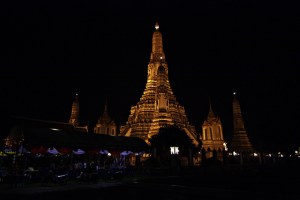
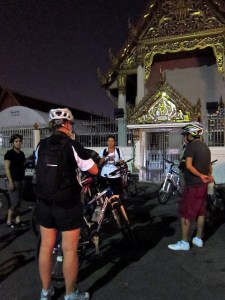
During the night bike tour with the Grasshopper Adventures, we stopped at Wat Arun while riding in Thonburi area. The temple was closed at night, so we could only observe the architecture from outside. At night the temple was illuminated, so it still looked quite impressive. I thought it was interesting however, that the temple was located in a residential neighborhood, and there were many local residents hanging out around the temple. While we stopped and listened to our tour guide Tami telling us about the history of the temple, there were many local kids (5-10 year olds) playing around near us — some with their little bicycles even rode around with our group for a little bit. Many people were at the temple preparing floats and flower arrangements; apparently the following day was King Taksin’s birthday, so they were preparing for a ceremony to commemorate that. King Taksin was the Thai King when the capital was in Thonburi, and he was one who set up the royal palace near Wat Arun.
The photo below was taken from outside the temple. You can see the recognizable spires of the temple, and the area on the left was where the preparation for King Taksin’s birthday ceremony was taken place.
 setiawanphoto