A few years ago I went to Eugene, Oregon, to attend a wedding. While we were there, we had an extra day when we could do some sightseeing or a day trip. I went with some of my relatives to Crater Lake National Park, which was around three hours southeast of Eugene. Crater Lake National Park is a unique park where the main feature is its namesake, Crater Lake, a caldera lake that was formed around 7,700 years ago when a volcano called Mount Mazama erupted and collapsed. There is no water source flowing into the lake; it gets the water from rainfall or snowfall. As such, the water is among the purest in the world, giving it its clear blue color when combined with its depth. The lake at average depth around 1,150 ft is the deepest lake in the United States (ninth deepest in the world).
During the road trip to Crater Lake, one thing that was nice about the drive was that for a long stretch, it went through the Umpqua National Forest, so it was quite a scenic drive with pine trees around and at times we would cross rivers and streams. It was pretty interesting that as we got closer to the lake, the drive was like going up on the mountain (well, because it was actually going up the mountain), until we reach closer to the rim of the caldera. We could walk on the rim and enjoy the panoramic view of the lake (it is 5 by 6 miles in area). There is also a road that you can drive around and get the glimpse of the lake from various angles.
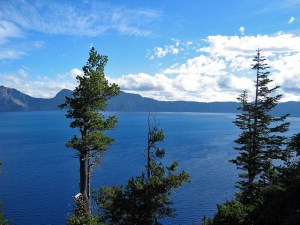
The photo below was taken at one of the overlooks during our drive around the lake. I didn’t have a camera with wide enough angle that could capture the panoramic view of the lake, but this particular photo shows the deep blue color of the lake surface.

 setiawanphoto