Santa Monica

Santa Monica is a city about 14 miles west of downtown Los Angeles, California. It is known for its beach, and as an affluent area where some of the Holywood rich and famous live. Many people probably recognize the Santa Monica Pier, a landmark in Southern California with the little amusement park at the pier, white sandy beach nearby, and the row of expensive beach front homes. And the image of people at the beach and the lifeguards in red swimsuits were made famous worldwide with the TV series Baywatch.

I didn’t know much about the area until few years ago when my brother got a job with a company located there. During a couple of years that he worked and lived there, I had several opportunities to visit him, and came to appreciate the place. My brother lived in an apartment about 5-minute walk from the beach, and from his living room of his apartment we could actually see the beach in a distance. The temperature is pretty constant about few degrees cooler than in the inland, and the area enjoys around 310 days of sunshine a year. Despite of being in a driven metropolitan like Los Angeles, life seems to be more laid back as you get closer to the beach.

Few months before my brother moved back to the East Coast, I had a major life event happening, and my brother suggested that I took a little break and came over to California at least for a few days. I did that, and not only it was nice to hang out with my brother for a few days, but it’s also nice to just walk around the beach simply to get fresh air, watch life goes on around, and think about the next steps I would take in my life. What we didn’t know was that my brother himself would go through similar situation not long after, and he ended up making decision to move back to the East Coast afterwards.

The last time I went there was to mark the beginning of the road trip back to the East Coast with my brother. Now that I don’t really have anyone I know living there, I’m not sure if I have any reason for going there to visit. But at least the place has more meaning to me than simply a place you see on TV shows.

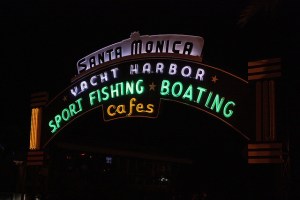
The photo below was taken the night before we started our road trip. This was the neon sign at the famous Santa Monica Pier.
Neon sign

Coast-to-Coast Road Trip

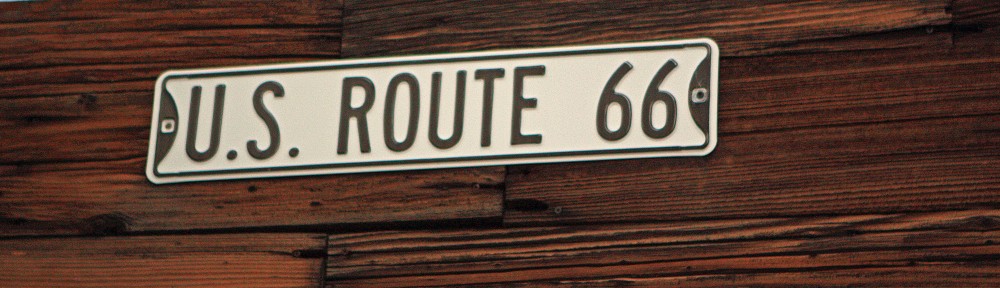
A while ago I wrote a blog post about Route 66, based on a road trip that I did with my brother three years ago. For the next series of blog posts, I’ll write about our experience doing this ‘once-in-a-lifetime’ trip.

When my brother asked me if I would be interested in doing a road trip with him from California to New York, it didn’t take me long to say yes. I had done long road trips in the US before, including some with my brother, but the thought of doing a coast-to-coast trip across the continent sounded intriguing, and I think it would be one of those that we would remember for the rest of our lives. We wanted it to be a good, lasting memory, so we tried to be planned accordingly to make the best use of our trip time.

The main reason for the trip was my brother’s relocation from Santa Monica, CA, to New York City. He had some belongings that couldn’t be easily transported coast-to-coast without paying significant shipping cost, so he thought it would be more cost effective to rent a car for one-way trip, load it up with his belongings, and drive it across the country. Given the long distance, he didn’t want to do it alone.

Since my brother was very busy with the logistics for getting things wrapped up in California before he officially moved for good, he asked me to plan out the trip. I always enjoyed the planning aspect of the trip, so I agreed to take on the task.

The first decision we needed to make was the route we would take for this road trip. The start and end points of the trip were fixed, and we also had a time constraint. My brother had just started with his new work position, so he didn’t have much vacation time that he could take. More over, he had to be back in New York City for an event. Altogether, we had about maximum 6 days time to complete the trip. Considering the distance and safe traveling time, we pretty much had to take one of the direct routes between the two end points without much detours.

Even with the constraints above, we still had decision to make in terms of the route to take. There were several possible routes we could take that would meet the travel time criterion. I used a book by Jamie Jensen called Road Trip USA that was quite helpful in providing overview of the major routes across the country. We decided to take one that is roughly tracing the famous ‘Mother Road,’ Route 66, and then finish out with a route that was pretty familiar to me in the Midwest / Mid-Atlantic area. For the Route 66 part, there were also several books I read to learn about places along the route to decide roughly where we would stop.

Beyond the route planning, we made rough arrangements to meet some people we knew who lived in the places that we passed during this trip. But other than that, we left everything else open as we wanted to keep the trip somewhat flexible.

We ended up going around 3,300 miles over 16 states in five days. The map below shows the route and the stops that we took along the way.

Coast to coast route

First Travel Journal Wrap-Up

Today I reached a milestone in blogging about my travel experience. At the beginning of this year I set out to write blog entries about the experience from a trip that actually happened about a year before. I decided to write about the trip in chronological order and covering experience I remembered about the trip. There was no other pre-planning on topics to write. 244 blog entries later, I finally reached the end of writing about this trip. It is quite significant because not only it’s the first time I wrote about a trip in its entirety, but also the trip itself was the first multi-country trip I had ever done in my life. I’m looking forward to writing more about other trips I had done (domestically or internationally), but to wrap up this series, here are some thoughts about the trip and about the blog writing experience.

Some thoughts about the trip:

  • Culture sensitivity: It is very important when traveling to be prepared and be sensitive about the local culture you’re about to immerse yourself into. Doing a little bit of research and learning prior the trip would help you understand what people value in the places you visit, the similarities and differences between your culture and theirs, and avoid committing cultural faux pas.
  • People to meet: One important part of a trip that enrich the experience is the people who you meet during the trip. This could be fellow travelers, the hosts or guides, people who provide services to you, or just random local people. Sometimes the interaction you have with them makes your experience unique and memorable.
  • Share experience: One great way to learn about the local culture is to share your personal experience or something from your own culture with the locals whom you meet. What you consider as ‘normal’ day-to-day experience at home might be a fascinating, novel thing to learn for the locals. Conversely, the ‘normal’ things for the local might be something new and fascinating for you to learn.
  • Overcome language barrier: I’m not naturally an outgoing person, and if you take out one tool I’m comfortable with (e.g. ability to communicate in a language I’m fluent in), then it becomes even more challenging to interact with others. But I need to constantly remind myself about the previous points above regarding people. There is more to the trip than just taking in the scenery or experiencing things yourself. And sometimes all it takes is the willingness to risk of making a fool out of yourself by attempting to say few words in the local language or using hand gestures, and keeping things lighthearted with a smile to break the ice and connect with the locals.
  • Don’t sweat small stuff: There will be things that don’t go according to plan — flight delays, bad weather, place closings, etc. Don’t let these ruin your trip, instead look at the unexpected as an opportunity to experience something different. Make the best use of your time to ‘make lemonade from lemons.’

Some thoughts about the travel blogging experience:

  • Ultimate souvenir: Dave Fox in his book Globejotting calls travel journal as the ‘ultimate souvenir.’ in a way, I think he is right as this is a great way to share your experience with others, and it’s a wonderful way to relive and cherish the experience.
  • Photos and notes to remember: If you want to write a travel journal, you need to keep things that help you remember the details about the trip. Photos are good visual reminders of what you experienced, but there are also things that are difficult to capture in a picture like emotions, smell, taste, sound, or even details like names. For those, it’s helpful to keep notes. The notes don’t have to be long or perfectly written; they just have to be enough to remind you about the experience.
  • Appreciate every moment: When you start reliving the travel experience, it’s amazing to think of a lot of little details that you would otherwise forget or overlook if you don’t come back and rethink about it. These add up to make your trip unique and memorable in comparison to others’ trip to the same places.
  • Learning more from writing: When I thought of a topic about my trip that I wanted to write about, I often did additional research about related facts to make sure what I’m writing is accurate. During that process, I often times learn about some facts or trivia that I didn’t know before. This made the process of writing even more interesting to me as I love to learn about things.
  • Taking time to write: Some people would write their travel blogs during the trip itself or only write random things the think or feel about the trip. I guess it’s a matter of personal preference or style, but to me, it is more worthwhile to take my time and think about what I’m about to write, as it would make it richer both to the readers of the blog as well as to me as the writer.

So that’s it about my Southeast Asian trip in 2010-2011. The photo below is a page from my passport with stamps from the countries I visited during this trip. Prior to this, my passport was pretty much clean and empty.

Stamps on passport

Hainanese Chicken Rice

Some of the best dishes I’ve had were among the simplest in terms of the list of ingredients used. When done well by the masters, these ‘simple dishes’ can be among the tastiest you ever had, and they highlight the flavor of the main ingredient. One of such dishes is a dish that is so popular in Singapore among the locals and visitors that it’s often considered as ‘the national dish of Singapore,’ the Hainanese chicken rice.

The Hainanese chicken rice is essentially boiled chicken served with rice steamed with chicken broth. It was originated from the Hainan province in China (thus the name), but it’s quite popular in Southeast Asian countries.

For me, this dish is one of those things that evoked childhood memories. I don’t remember much from my toddler days, but one thing I remember was having lunch at my aunt’s home and being served boiled chicken with chicken broth and steamed rice. Very simple dish, but it’s one that highlights the chicken flavor very well. It’s also meaningful for us as we heard stories from my aunt and my dad about having this dish for special occasions when they grew up, as their family was poor and couldn’t afford to buy chicken meat frequently.

During our short stop in Singapore, I wanted to try out the Hainanese chicken rice dish there. One of the stalls at the Maxwell Road Hawker Centre near Singapore Chinatown happened to be a famous place to get Hainanese chicken rice, Tian Tian Hainanese Chicken Rice stall. This was the place visited by Anthony Bourdain to have his Hainanese chicken rice dish in his Singapore episode of No Reservations.

We stopped there for early lunch before going back to the hotel to head to the airport. Since it was still pretty early, there was no line yet at the stall, and we were able to get our order quite quickly. The food was good and lived up to the high expectations, though unfortunately we had to eat quite quickly as we’re running late to head to the airport for our flight back to Indonesia.

Here was the Hainanese chicken dish from Tian Tian, just before we consumed it in minutes. It’s really good, and definitely highly recommended.

Hainanese chicken

Buddha’s Tooth

One place in the Chinatown area of Singapore has an interesting name that caught my attention when I checked out the neighborhood map to chart the course for our walking tour, the Buddha Tooth Relic Temple and Museum. Some questions came to mind: Do they really have Buddha’s tooth there, or is it just a name for the temple? In either case, why is the tooth a significant and revered artifact / relic? If it is a temple and museum, can non-Buddhist visitors come and check it out? What do they show in the museum?

All of these questions were answered as we stopped there after we walked around the neighborhood. The building itself was pretty easy to spot; it’s a seven-story building right across from the Maxwell Road Hawker Centre that unmistakeably looked like a temple, but at the same time you could tell it’s a modern structure (it was built in 2002).

We had some time left before we had to head back to our hotel, so we decided to at least looked closer at the building’s architecture from outside. As we were taking photos outside the building, we saw other visitors walking into the building, and they looked like tourists. So we decided to follow them, and then found out that we’re welcome to come inside and visit. There was a worship session going on, but we could come in to observe from a distance, and we were allowed to check out the Buddha statues on the perimeter wall of the main floor as well as going up to the museum on the higher floors.

This was the first time I entered a Buddhist temple and witnessed a live worship session. There were about 20-30 people sat on several rows of tables, and a couple of monks up front leading the congregation chanting. It was similar to visiting a Cathedral while there was a mass going on and the priest leads the congregation singing or praying. There was also another area where a worshipper could come and meditate in front of a Buddhist statue. We saw several folks doing that instead of participating in the group session.

You were also allowed to go up several other floors of the building. On the second level, there were some more Buddha statues to see, and you could see a bird’s eye view of the worship session on the ground floor from several windows that opened up to the worship area.

One of the higher floors was marked as the floor where the Buddha’s tooth relic was housed. We went up there, and found out that we could come in and see the relic, though we had to take our shoes off in reverence, and only 1-2 visitors at a time could go in to see it for few minutes and photography was not allowed inside. When we went in, there was a monk in the room who was watching the room, and up front there was a glass chamber with a small golden stupa where the Buddha’s tooth was stored. We couldn’t really see the tooth itself, but we just have to trust that it’s there. Later on I learned that the reason why the tooth is an important relic is because when the Buddha’s body was cremated after he died, the tooth did not burn down. So it’s considered as a sacred relic to be used in worship.

There was also another floor in the building that had a museum display that told the story of Siddhartha Gautama, the founder of Buddhist faith, and also the explanation about what the Buddhists believe and about the various manifestations / reincarnations of Buddha. I spent some time trying to take it all in, but at the end it was very complex and it would take some time to internalize. But I appreciated the welcoming and nice display set up in this museum to help people learn about the Buddhist faith.

The photo below was taken right after we entered the main floor while we observed the worship session going on. You could see here the worshipper sitting and chanting. The monks who led the worship session sat near the golden Buddha statues upfront.

Worship session