Grand Canyon

One national park in the United States that is among the most well-known is the Grand Canyon National Park. Located in Northern Arizona, it is a canyon carved by the Colorado River since over 17 million years ago, exposing layers of rock that tell the earth’s geological history from over two billion years ago. The Grand Canyon is 227 miles long, up to 18 miles wide, and over one mile deep. It is considered as one of the world’s natural wonders.

The first time I visited the Grand Canyon was during the time I was working on a project for a regional hospital in the Navajo Indian Reservation about one hour north east of the Grand Canyon. One day I decided to leave work early and on my way back to Phoenix, I took a detour into the park. I remembered the first time I saw the canyon after driving on flat lands for a while. I’ve seen photos and TV programs on Grand Canyon before, but nothing compared to seeing it with my own eyes. It’s one of those sights that just took my breath away and all I could say was ‘wow.’ Since then, I’ve been back to the Grand Canyon National Park several times, and it’s still awesome to see the sights and observer other visitors’ reaction in seeing the canyon for the first time. But that first visit was one that I always remember.

The photo below was taken during one of my return visits to the Grand Canyon. It’s a photo of the canyon from the South Rim during the sunset. One of the lessons I learned from visiting the Grand Canyon is that the best time to take photographs of the canyon is either at sunrise or at sunset, when the sun light is soft and not as harsh as in the middle of the day. During the day in the bright day light, your photos of the rocks would look washed out.

Sunset at Grand Canyon

Sequoia

Sequoia National Park is located in the southern part of the Sierra Nevada mountain range in California. The national park includes Mount Whitney, which at 14,505 ft is the highest point in the contiguous United States. But it’s most famous for its giant sequoia trees, including the General Sherman Tree, the largest tree by volume on earth.

I went to Sequoia National Park on a road trip with my mom and uncle. We drove from LA area where my brother lived at that time. It took about four hours to drive to the national park. We spent an afternoon driving inside the park, starting with a winding road with great view of the Sierra Nevada mountains around, and ended with a drive through the giant sequoia forest among the very large trees. It was quite surreal driving with these giant trees around us; I felt like the scale proportion (between us/our car and the trees) was off. We stopped at a couple of places to observe the trees from up close, and we did the short hike to get to the General Sherman Tree.

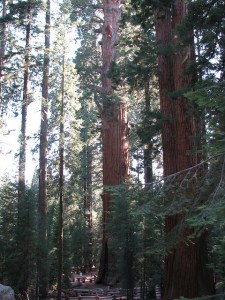
The photo below was taken during our hike to see the General Sherman Tree. The tree in the middle is the famous tree from some distance. At a glance, it looked like a normal tree, until you see the little specs at the foot of the tree — those are adult-sized humans around 5′ 5″ – 6′ tall! Here are some statistics that would put this tree in perspective: It is not the oldest, highest, or widest tree in the world, but with a height of 83.8 metres (275 ft), a diameter of 7.7 metres (25 ft), an estimated bole volume of 1,487 cubic metres (52,513 cu ft), and an estimated age of 2,300 – 2,700 years, it is among the tallest, widest and longest-lived of all trees on the planet.

General Sherman Tree

Mount Rainier

A couple of days after visiting Crater Lake, I went on a road trip with my family north from Oregon to Washington State. We spent several days sightseeing with Seattle as our base. On one of the days, we went on a day trip to Mount Rainier National Park which is located only around 60 miles away from Seattle. Mount Rainier is the most topographically prominent mountain in the contiguous United States with summit elevation around 14,400 feet. It is also considered as one of the most dangerous volcanoes in the world, given that it’s still active and its location that is close to largely populated areas. On a clear day, if you’re in Seattle-Tacoma metro area, Mount Rainier would dominate the southeastern horizon view from the city.

We spent our time in the park mostly driving around the loop road to enjoy the mountain scenery. Given that we had a large group of people (around 20 people in four cars) and varying age and level of fitness, we didn’t do any physical activity like hiking or long walks. But since most of the family members came from Indonesia, it was still a treat for them to be able to get high enough in altitude and even during the summer month they could enjoy the fresh mountain air and saw the snow-covered peaks.

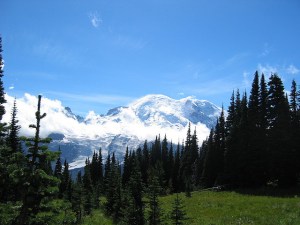
The photo below was taken during the drive in the park. You could see the prominent peak of Mount Rainier in the distance.

Mount Rainier

Crater Lake

A few years ago I went to Eugene, Oregon, to attend a wedding. While we were there, we had an extra day when we could do some sightseeing or a day trip. I went with some of my relatives to Crater Lake National Park, which was around three hours southeast of Eugene. Crater Lake National Park is a unique park where the main feature is its namesake, Crater Lake, a caldera lake that was formed around 7,700 years ago when a volcano called Mount Mazama erupted and collapsed. There is no water source flowing into the lake; it gets the water from rainfall or snowfall. As such, the water is among the purest in the world, giving it its clear blue color when combined with its depth. The lake at average depth around 1,150 ft is the deepest lake in the United States (ninth deepest in the world).

During the road trip to Crater Lake, one thing that was nice about the drive was that for a long stretch, it went through the Umpqua National Forest, so it was quite a scenic drive with pine trees around and at times we would cross rivers and streams. It was pretty interesting that as we got closer to the lake, the drive was like going up on the mountain (well, because it was actually going up the mountain), until we reach closer to the rim of the caldera. We could walk on the rim and enjoy the panoramic view of the lake (it is 5 by 6 miles in area). There is also a road that you can drive around and get the glimpse of the lake from various angles.

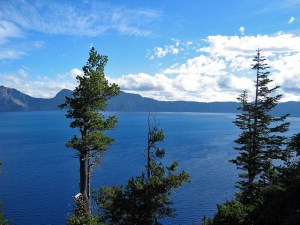
The photo below was taken at one of the overlooks during our drive around the lake. I didn’t have a camera with wide enough angle that could capture the panoramic view of the lake, but this particular photo shows the deep blue color of the lake surface.

Blue water of the Crater Lake

Shenandoah

Shenandoah National Park is the nearest of the 58 US national parks from my home, around 60 miles away. As such, it’s a great place to go for weekend outdoor activities when the weather is nice. The main route through the park is the Skyline Drive, which stretches around 100 miles from the north entrance to the south entrance of the park. There are a couple of highways that cut across the park, so you can also enter or exit the park at those points instead of coming or going all the way to the end.

Most people visiting the park stay only on the Skyline Drive. It has many nice lookouts where you can stop and enjoy the scenery. But if you’re physically able and have the time, I think you can enjoy the park even more by hiking through some of the 500 miles of trails within the park. Some of these trails take you to places with scenic views of the Shenandoah Valley, while others take you to waterfalls and streams. About 100 miles of the legendary Appalachian Trail goes through Shenandoah, so you might meet hikers in the middle of doing that epic journey. During the hike, you might also encounter the wildlife, from deer to wild turkey, rabbit, or even black bear. So for nature photographers who live in DC area, this is one of the popular photography destinations nearby.

The photo below was taken from a lookout on Skyline Drive in the morning, not long after the sunrise. You could see some of the clouds and fogs still covering the lower altitude area in the valley.

Morning at Shenandoah