Korean Air

The first part of my long trip from Washington, DC, to Jakarta was a 14-hour flight from DC to Seoul. Looking back and thinking about what I remembered about the experience made me think of some things that make me look forward to experiencing an international flight (in comparison to typical domestic, shorter distance flights).

When you think of international flights, two things that come to mind are typically the long distance and the time it takes to complete the flight. As such, the obvious emphasis from the airline perspective is to ensure that the flight is as comfortable and enjoyable as possible for the passengers. This means wider seats, longer leg room, selections of in-flight entertainment, and good food/refreshments. Very different than shorter distance flight where typically the passengers care more about getting to the destination as fast as possible, and the airlines try to maximize the load and have expedient turnaround.

Another aspect with international flights that sometimes become the differentiator for the airlines is the cultural/national influence of the carrier’s country of origin. For some of them, the airline and the service it provides represent their country/culture, so they would take it seriously and serve with pride (I don’t think you would see this from any of the US-based carriers). For me personally, this aspect I think makes a big difference between a flight experience that is simply good to the one that is memorable. I think my first flight experience on Korean Air was an example of that.

The first impression on the aircraft was good with modern, clean, and spacious cabin of their Boeing 777. The boarding process was efficient, the flight attendants were welcoming with smiles, and as the result the passengers seemed to be happy to start their journey. Then there was the Audio Video On Demand (AVOD) system, which has the job of occupying the passengers mind during the flight to make the long flight seems to pass quicker. It did a good job for me, as I was able to find a couple of movies I had not seen, and found all kinds of music from various Asian countries to listen to.

Then there was the food. On a 14-hour flight, we went through some snacks and several meals. So there were several occasions where they needed to provide good variety of food that the passengers would enjoy. With Korean Air (and similarly, with some other Asian carriers), they would provide options for either western-style menu or Korean-style menu. This is to address both the westerners who don’t really care for trying Korean food and also the Korean nationals and others who actually are looking forward to having their national dishes. I think this part was one of the highlights of these international flights, as you get to try something that’s unusual for American experience.

Lastly, another factor that may make an international flight memorable are the passengers themselves. Depending on the flight route, you can expect different demographics making up the list of passengers. For example, going from DC to Seoul, you can expect to find a majority of the passengers being Koreans who are going to their home country. It was interesting to people watch and see how people from different cultures behave.

I took the photo below just before we took off. There were two mothers traveling in this long flight with their young children. They were given the bulkhead seats as the Korean Air flight provided the bassinet to place their little children in so they’re comfortable during the flight. These two little kids did very well during the flight and didn’t cry or got upset at all. And they made for a fun source of entertainment from watching them play and make facial expressions.
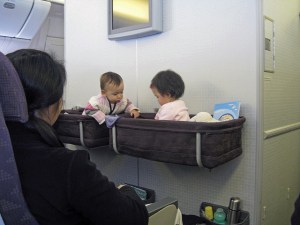
Little kids in Korean Air flight

South Korea

When you travel internationally, often times it is unavoidable that you have to take long international flights. This part of the trip could be a drag.. or it could be an adventure in itself.

Several years ago, I had a family emergency that required me to travel from the United States to Indonesia within a short notice. Given the last-minute nature of the trip, I had to take the flight option that would get me there the earliest possible, even if it meant inconvenient routing. The flight I ended up taking was on Korean Air, and the itinerary was as follows: 14-hr flight from DC to Seoul, followed by 22-hr layover, and then another 7-hr flight from Seoul to Jakarta. It would’ve been the longest air travel I had ever experienced in my life.

I usually plan ahead for any of the trips that I take. In this trip, however, I didn’t have time to plan, so I pretty much just played it by ear along the way. I had never traveled on Korean Air, nor had I been in South Korea before. So it was completely a new experience. In the next few days, I will post some entries highlighting my experience during this trip. But if you don’t want to wait for the postings, you can also check out my flickr photo album that tells the story about this experience in images.

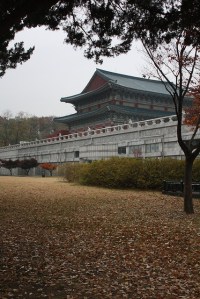
The photo below was taken at the National Folk Museum in Seoul, South Korea. The building had a nice, elegant architecture, and it was autumn, so there were colorful leaves on the trees and on the ground. How did I end up at the Museum during this trip, you might ask? Well, check out the flickr album, or stay tuned for more on this adventure..

National Folk Museum in Seoul, South Korea

Mystic Seaport

The last stop during my New England road trip was the Mystic Seaport in Mystic, Connecticut. The Mystic Seaport is a maritime museum with collection of sailing ships and boats, some were more than 100 years old. It also has a replica of a 19th century seafaring village, portraying what life was like back then in a coastal community.

It was already mid-afternoon when I arrived at the Mystic Seaport, so many of the programs for the day were already finished. I spent most of my time there checking out the ships and boats, big and small, that were docked at the port. There was also one big ship called Charles W. Morgan that had been at the Mystic Seaport since 1941, and was in the middle of restoration process at the shipyard to make it seaworthy again. Visitors could climb up into the ship to see what the interior was like. And there was also Schooner Amistad, which was used in filming Steven Spielberg’s movie Amistad.

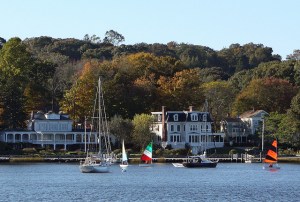
The photo below was the scenery on the Mystic River that I saw from the seaport. It was a nice fall afternoon, and some people were cruising in their sailboats on the river. In the background, there were some nice homes with riverfront view.

Sailing on the Mystic River

Sakonnet Vineyards

Who would have thought of New England as having a wine region? I didn’t know this, until when I looked for things to do in Rhode Island during my New England road trip and found out that there are some vineyards located in Southeastern part of New England (Connecticut, Massachusetts, and Rhode Island). The climate at the southern coast of New England apparently is similar to the northern coast region of France, so they are able to grow some varietals of grapes for winemaking. I thought this was pretty interesting, so I decided to include a visit to one of the oldest vineyards there, the Sakonnet Vineyards in Little Compton, Rhode Island.

I visited Sakonnet Vineyards on an early Monday afternoon, so there were hardly anyone visiting at that time. When I arrived at the tasting room, there were two couples in the middle of their tasting session. I found out that they were from Boston, and they were in the area for a long weekend checking out Sakonnet and several other vineyards in the area. When it came to my turn to taste the wine, I was the only guest left, so I got to chat with the winery staff about their winemaking venture in New England. One of them happened to be the owner herself, so I had good conversation with her and learned that she was working in high-paced life in New York City prior to moving to Rhode Island to ‘slow down’ and start Sakonnet Vineyards. We also had good conversation about the impact of New England climate on the vineyards (such as the freak snowstorm that happened the night before my visit). She said since their vines had been around for more than 30 years, they’re more adapted to the local climate. Some of their newer neighbors were not as fortunate and might had lost some to the inclement weather.

After tasting their wonderful varieties of wine, I asked if they had tours of the winery scheduled. They did have tours scheduled, but since the next one was not until later that day, and I mentioned that I couldn’t wait that long since I needed to continue my road trip, the manager offered to give me a winery tour right then. It ended up to be a personal tour just for me — quite a nice treat / hospitality from them.

The photo below was taken just outside their Hospitality Center. I would definitely recommend a visit to this place especially if you’re a wine aficionado. Try their Rhode Island Red; I thought that was among the best red wines I had ever tasted.

Sakonnet Vineyards

The Breakers

I started the last day of my New England road trip with a visit to The Breakers, a mansion in Newport, Rhode Island, owned by the Vanderbilt family.

In the late 19th century, the Newport, RI, area became a summer destination for the wealthy Americans. There are several of those mansions that today became museums that you can visit. But one that is definite a ‘must visit’ is The Breakers, a 70-room mansion built by Cornelius Vanderbilt II (who was among the wealthiest persons in the United States at the time). He spared no expense in building this mansion. The home was constructed between 1893 and 1895 at a cost of more than $12 million (approximately $316 million in today’s dollars adjusted for inflation).

During the visit there, as part of the admission you get a headset/handheld player for a self-guided audio tour of the home. So you can spend as much or as little time on any part of the home. You’re not allowed to take photos inside the home, but you’re allowed to do so at the balcony outside and at the grounds around the home.

Here are some of my thoughts from my visit to this huge mansion. The home was definitely impressive and opulent, though it’s not my style preference (I like the modern style of interior design, more minimalist and clean style rather than the ornate). It’s mindboggling to think that this was only a vacation home for the Vanderbilt family, not their primary residence. The sad part of the story was that Mr. Vanderbilt could only enjoy the home that he built for four years, as he died due to a stroke in 1899. And it seemed that none of the Vanderbilt children except their youngest one, Countess Gladys Széchenyi, liked the property (she ended up inheriting it from her mother). Today it is preserved and opened up as a museum that provides a view to the life of the American rich and famous from the 19th century.

The photo below was taken at the balcony of the home’s second floor. Personally I thought the balcony was my favorite space in this home as it felt like a getaway from the heavily decorated rooms inside the home, and the ocean view facing the east was awesome and peaceful.

Balcony at The Breakers