Independent Trekker

One option to consider when visiting Sapa, Vietnam, is to do your own trekking without enlisting a tour company to arrange the trip. This would give you more freedom to explore the area at your own time and create an experience that’s possibly unique to yourself. But it might not be one for you if you’re more structured or less adventurous, unless you can plan ahead of time and chart out your route.

On our second day in Sapa, our guided trek was cancelled, so we’re left with the option of exploring on our own, or just staying put at the hotel. We had pretty much all day, but we also had to be back at the hotel by 6 pm and ready to go for our trip back to Hanoi. So, after spending the morning only hanging out in the town of Sapa close to the hotel, we finally decided to spend a couple of hours doing our own trek to a nearby village called Cat Cat that’s located only about 1-2 miles away from the hotel, and according to the hotel staff, it’s pretty easy to find.

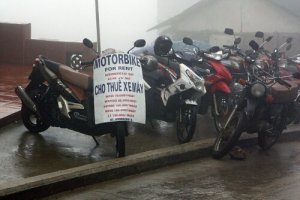
On the way to do our own trek, we saw one more option that’s probably even more adventurous — rent a motorbike to ride around to villages. The cost was pretty reasonable, and it can get you to places more efficiently, but when the weather is not cooperating, with the steep grades in some location and muddy paths in others, I’m not sure this would be a safe activity to do. All I could think of was a tourist getting injured in a motorcycle accident, and his/her travel insurance wouldn’t cover the expenses because the activity was considered as one that’s not covered by the insurance policy.

The photo below was taken as we passed the motorcycle rental place. You can see the various motorcycles they had. Notice there was only one helmet there; I wonder if that’s considered optional.
Motorbike for Rent

Mobile Phones

When traveling these days, it’s difficult to travel without having some form of electronic communication. At the minimum, having access to the Internet via connection at an Internet cafe is useful so one can communicate with others during the trip, or use the Internet to find the latest, up-to-date information about the places to be visited. As you travel to different places in the world, it is also interesting to observe how the locals use technologies.

During our Southeast Asia trip in 2010-2011, one thing I noticed was how ubiquitous wireless communication was in the countries we visited, including places that one may think as a third-world or developing countries. In Cambodia, our local tour guide mentioned that one of the most well-known brands there was Nokia — almost everyone had Nokia mobile phones, some never even had or known the concept of land phone lines at homes or offices. In Indonesia, these days Blackberry is king. Even though in the US people abandoned their Blackberry devices for iPhones and Android smart phones, in Indonesia Blackberry had gained popularity because of its Blackberry messaging that is seen as more cost effective way to communicate in place of SMS / text messaging.

When we were in the mountainous region of Sapa, what was surprising for me to observe was how good the wireless signal reception was there — I had full 4 bars on my phone which was even stronger signal than some places in the Washington, DC, area where I live. In some areas, the developing countries today have more modern and sophisticated communication network as they essentially went directly to the latest technology rather than having to upgrade existing, outdated legacy infrastructure that’s in place.

The photo below shows my Blackberry with the signal reception I got in Sapa — full bars, even when we walked around in the nearby villages.

Mobile Phone

French Cafe

As we walked around on the main street of Sapa, Vietnam, we saw many businesses established in the downtown area that were clearly targeted to capitalize on the increased interets for tourism in the area. There were many restaurants, hotels, and souvenir or backpacking supplies stores around.

Kristi and I started doing a new routine to begin our days in Vietnam during this trip, getting Vietnamese coffee as part of breakfast to jump start the day. Our hotel, Sapa Rooms Hotel, had a restaurant with a really good menu of both authentic Vietnamese and western dishes to choose from, and breakfast there was included in our stay. However, on the second morning of our stay, the coffee machine at the hotel broke, so we couldn’t get our coffee fix. Since our morning now opened up because our scheduled trek was canceled, we decided to explore the town and find a place to get the coffee. We thought surely we could find places that serve Vietnamese coffee.

As we reached the end of the commercial area on the main street of Sapa, we found a small restaurant/cafe aptly named the French Bakery that seemed to serve French-inspired pastries and drinks. The place looked nice and they had a nice display of some of the items they had on the menu, but it was empty when we got there. Nevertheless we thought we could still chek it out and hang out for some time in the morning there.

The Vietnamese lady who ran the restaurant seated us at one of the booths in the small dining area. We ordered the standard hot Vietnamese coffee served with condensed milk, and also an order of tiramisu to share. Later on some more customers came to the restaurant and it became more lively. Both the tiramisu and the coffee were good and definitely hit the spot especially on a cold and wet day outside.

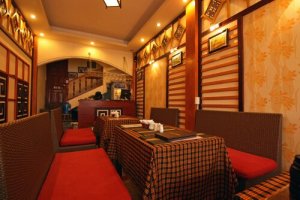
The photo below was taken in the dining room of the restaurant, before more customers came. You could see it being pretty small but cozy.

French Cafe

Sapa Market

The Sapa Market is a traditional marketplace at the heart of downtown Sapa, Vietnam. It’s still the main meeting place for people in the nearby villages to to buy and sell their produce and goods. Recently with the increasing popularity of Sapa as a tourist destination in Northern Vietnam, you also see the market evolving to also cater to foreigners who come to visit the market to look for souvenirs, backpacking supplies, and anything that represents the local culture.

We walked through the main street of Sapa and passed through a portion of the market. We didn’t actually get in to the market itself as we didn’t really have any particular need for purchasing anything. The market itself from outside looked similar to many traditional markets that we’re familiar with in other Southeast Asian countries, with stalls occupied by vendors selling fresh produce, mixed with stores selling souvenirs.

The photo below was the main entrance of the market as seen from the main street of Sapa.  The think fog in the morning added a unique feel to the scenery, though for the locals it’s just another beginning of a day in Sapa, nothing special.

Sapa Market

Gears for Sale

When we walked around the town of Sapa, Vietnam, we noticed something that our Australian friends Dave and Anna mentioned the day before, there were many stores in Sapa where you could get trekking / outdoor gears in case you need them. The interesting part was that you would see displays of gears — jackets, hats, pants, shoes, sandals, etc. — that looked very much like what you would find in a sporting goods store, except that the price was significantly lower than what you would find in the United States or Australia.

There were items we saw that looked suspiciously like counterfeits (like sandals that looked like Keen sandals but if you observe closely you see that the brand was actually 3.ten (but shaped like Keen logo). But there are also jackets that looked like legitimate North Face or Columbia gears but at much lower price than what out would expect.

This reminded me to going to ‘factory outlets’ in Indonesia where you could find brand name clothes for cheaper price. What I learned in Indonesia was that those items sold there were typically coming from the same manufacturers who produced the real thing for the actual well-known brands, but some of those merchandise might have small defects that didn’t pass the inspection for export, but to regular consumers who are price sensitive, that would be good enough compromise to make. Compare that to going to a store in the United States to purchase the gear that is guaranteed to be authentic from the chosen brand name, but when you looked at the tag you find that it was made in Vietnam or Indonesia. Or even worse, going to an upscale company store in Jakarta, Indonesia, to purchase clothes that were imported from the United States but prior to that it was exported from a developing country. So you may end up paying the markup due to the exports, when you could get the same thing at much lower price if you know where to look. In the end, it comes down to how much you care for the brand name and the quality of the product, and how much you’re willing to pay for that.

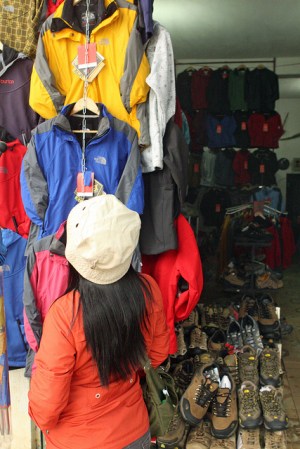
The photo below was taken as we perused the merchandise at one of the stores. Notice the merchandise on display that looked like the real deal (or they could probably be, we just didn’t know).

Gears for Sale