Unknown's avatar

About setiawanphoto

Photographer. Traveler. Foodie.

Badlands

Badlands National Park in South Dakota features landscape that may not conform to everyone’s idea of beautiful, but the scenery there is certainly dramatic and other-worldly. Weather erosion caused the cliffs on the Badlands Wall to have jagged edges, and mixed with prairie land around, it provides very unique and somewhat surreal landscape. This national park is also known to have one of the riches fossil beds in the world where many unique fossil species had been discovered. The national park’s prairie area is also home for some wildlife, including bison, deer, pronghorn antelope, prairie dog, and black-footed ferret.

I visited the Badlands National Park during a drive from Pine Ridge Indian Reservation at the south of the park on the way to Rapid City, South Dakota. The drive through Badlands took us through very dramatic scenery with towering jagged cliffs around, and at times going through a vast prairie land where we could see a herd of pronghorn antelopes and prairie dog city in the distance.

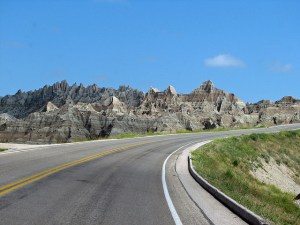
The photo below was taken from the front passenger seat while we were driving inside the park. Someone on flickr commented on this photo saying that the jagged cliffs looked like serrated knife edge. It’s definitely a unique scenery that you can’t find elsewhere.

Badlands

Yellowstone

Yellowstone National Park is located in the Northwest corner of Wyoming and a little bit into Idaho and Montana. It is the first national park ever established in the world in 1872. The park is known for its wildlife (including bison, elk, deer, moose, pronghorn, coyote, wolf, grizzly bear, black bear, mountain lion, eagle, osprey, and many more) and the geothermal features (geysers, mud pots, hot springs, including the famous Old Faithful geyser). This park also has many other features that makes it a wonderland for outdoor enthusiasts — forests, mountain ranges, lakes, rivers, canyons, waterfalls.

I visited Yellowstone as part of a road trip to Wyoming along with a visit to the Grand Teton National Park nearby. Yellowstone National Park area is quite large that we decided to cover different areas of the park on each of the two days that we spent in the area. The first day we covered the western part of the park, driving north all the way to Mammoth Hot Springs area (about 51-mile drive). The second day, we covered the eastern part of the park to the Grand Canyon of Yellowstone area, and then drove back in a loop through the Old Faithful area. We did see some of the major features like the Old Faithful Geyser, the Grand Prismatic Spring, Mammoth Hot Springs, and the Grand Canyon of Yellowstone, but during the two days we could only do mostly driving around with occasional stops to visit overlooks and sights.

From wildlife viewing perspective, we were so excited to see a herd of bison not long after we entered the park, but by the middle of our first day, the bison were seen everywhere (including some that caused traffic jam as they walked on the road and took their time with a long line of tourists waiting). It’s hard to believe that the bison once roamed around everywhere all over United States (numbered between 25-60 millions by estimates at one point), but in the 19th century they were hunted to almost extinction. The herd in Yellowstone National Park was the last free ranging bison herd in the United States, and at one point there were only 23 of them left. Now there are about 3,700 of them in the park, a testament of how the National Park helped bringing back the bison from endangered species status.

We also saw one black bear from a distance, several herds of elk, and a couple of moose. Unfortunately we did not see any grizzly bear or other animals that you probably have better chance of encountering when you go on a hike into the forest trails. The coolest wildlife encounter was one that was totally unexpected. When we were driving back towards Jackson Hole after dark on the second night, at one point we noticed an animal walked across the road in the distance. We slowed down and stopped, and when we looked to the side of the car, we saw a wolf pausing after crossing the road and looking at our car. For a few moment, we just looked at wolf in awe, and before we could get our cameras to take a snapshot, the wolf continued its trek and disappeared into the darkness.

The photo below was taken near the Mammoth Hot Springs at the north part of the park. You could see part of the geothermal features nearby, and in the distance you can see the resort area in the valley and the wide open country in the background.

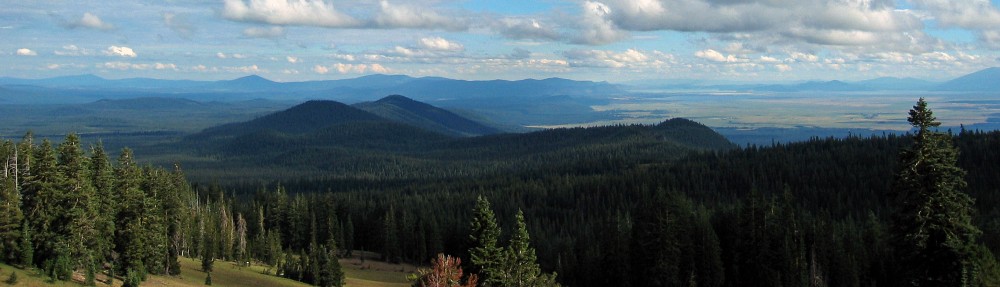
Yellowstone Country near Mammoth Hot Springs

Grand Teton

Grand Teton National Park is located on the Western part of Wyoming. Its main features are the picturesque mountain peaks, the nearby Snake River area, its many lakes, and the wildlife that include the elk, bison, and moose. Most visitors stay at the nearby town of Jackson Hole that is also known as a ski destination during the winter time. Yellowstone National Park is less than an hour north of the Grand Teton.

I visited the Grand Teton as part of a road trip to check out both this park and Yellowstone. We stayed in Jackson Hole, and did a river sightseeing trip on the Snake River (much tamer alternative to whitewater rafting). We were able to observe some wildlife (birds) and enjoyed the scenery from the river. We also drove around the park on the way to Yellowstone – stopping by to see some of the lakes with pristine water that you could see reflection of the mountain on the water and the pebbles at the bottom of the lake. And near sunset, we saw a herd of elk out in the distance.

The photo below was taken around sunset from an overlook where you could see the mountains in the distance and the Snake River meandering in front. This is a classic photograph that must have influenced many shots and landscape drawings; I remember when I was little, in the art class drawing mountains included the meandering river coming from the distance.

Grand Teton

Rocky Mountain

Rocky Mountain National Park is located about 1.5 hour drive away from Denver, Colorado. Its main features are the mountains and the varied environments from forests to mountain tundras. You can drive the Trail Ridge Road, a stretch of US Highway 39 that goes through the park from Estes Park in the east to Grand Lake in the west. The road is the highest continuous highway in the United States, reaching maximum elevation around 12,100 feet elevation.

I went to the Rocky Mountain National Park while visiting some relatives who lived in Denver during a 4th of July weekend one year. We went on a trip where we drove to the park and visited a camp ground in the park to listen to a presentation on elks on the first day, stayed at the nearby Estes Park for the night, and on the second day drove up the Trail Ridge Road past its highest elevation. It was pretty interesting to notice the difference the high elevation makes to the wildlife and vegetation. Temperature went from the 80s in Denver when we started the road trip to the 40s up there. Not only it was cold, but it was also quite windy. We saw wildflowers and other tundra vegetations, and learned from the park ranger on a short tour of the tundra that everything was so low to the ground so they’re able to withstand the high winds.

The photo below was taken at a stop on the Trail Ridge Road up on the mountain. This was a trailhead for a hike in the mountain tundras. It was too cold for us to take on this hike, and some of us started feeling a bit woozy from not the elevation change (and lower oxygen level up there), so we decided to head back down the mountains instead.

Trail head at Rocky Mountain

Bryce Canyon

Bryce Canyon National Park is located in Southwestern Utah, about 90 miles away from Zion National Park. Bryce Canyon is known for its hoodoos, the spire-like rock formations in arid, desert areas formed by erosions. While hoodoos can be found also in other places in the world, nowhere else you could find a large concentration of them like in Bryce Canyon.

I arrived late at night on my first visit to Bryce Canyon, and we went straight to our hotel that was located just outside the park. We went to the Bryce Amphitheater — the main area where the hoodoos are found in Bryce Canyon — very early in the following morning, hoping to catch the sunrise and see the sun light illuminating the amphitheater area in the morning. We were not disappointed; it was quite a sight seeing the sun rises in the distance, then slowly seeing the hoodoos in the Bryce Amphitheater being lighted from just silhouettes to bright red color of the sandstone. During the daytime, you can see the area quite clearly from various overlooks in the park. The air quality around Bryce Canyon is among the best that you can see as far as 160 miles away from there.

The photo below was taken from an overlook near the Bryce Amphitheater during my second visit to the park. It was early spring time. That morning it was a bit cloudy so we didn’t get to see the same dramatic illumination of the hoodoos, but the sun light was still soft in the morning that you can see the details of the hoodoos at the Bryce Amphitheater. In the background, you see some vegetations that looked like bushes. Those are actually tall pine trees — to give you an idea of the scale.

Bryce Amphitheater