Kings Canyon

Kings Canyon National Park is another national park in the Sierra Nevada that is north of the Sequoia National Park. The two parks are contiguous and are connected by a highway. Kings Canyon National Park consists of two parts. One part is the General Grant Grove, which has a smaller concentration of giant sequoia trees compared to the area in the Sequoia National Park. The General Grant Grove includes the General Grant Tree, the largest in the the park and the second largest by volume after the General Sherman Tree in Sequoia National Park. Another part of the Kings Canyon National Park is the backcountry area east of the General Grant Grove, which comprises 90% of the total area of the park. This includes the namesake of the park, the Kings Canyon, which at the maximum depth of 8,200 feet is one of the deepest canyons in the United States.

I visited the Kings Canyon National Park right after visiting the Sequoia National Park. We drove through the General Grant Grove area and continued eastward until we reached the end of the paved highway. It was towards the end of the day, and there were hardly any other visitor in the area, so it really felt like we’re alone in the middle of the nature. It was very quiet and peaceful out there.

The photo below was taken when we stopped at the east end of the paved highway through Kings Canyon. In the distance is the Kings Canyon and the mountain range around it. We didn’t go on any hike down the canyon, but even just from this overlook we could imagine it would be quite an experience going through the backcountry and experiencing the nature there.

Kings Canyon

Sequoia

Sequoia National Park is located in the southern part of the Sierra Nevada mountain range in California. The national park includes Mount Whitney, which at 14,505 ft is the highest point in the contiguous United States. But it’s most famous for its giant sequoia trees, including the General Sherman Tree, the largest tree by volume on earth.

I went to Sequoia National Park on a road trip with my mom and uncle. We drove from LA area where my brother lived at that time. It took about four hours to drive to the national park. We spent an afternoon driving inside the park, starting with a winding road with great view of the Sierra Nevada mountains around, and ended with a drive through the giant sequoia forest among the very large trees. It was quite surreal driving with these giant trees around us; I felt like the scale proportion (between us/our car and the trees) was off. We stopped at a couple of places to observe the trees from up close, and we did the short hike to get to the General Sherman Tree.

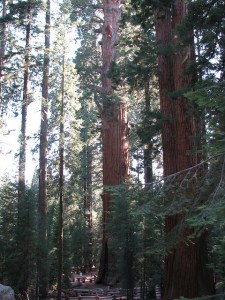
The photo below was taken during our hike to see the General Sherman Tree. The tree in the middle is the famous tree from some distance. At a glance, it looked like a normal tree, until you see the little specs at the foot of the tree — those are adult-sized humans around 5′ 5″ – 6′ tall! Here are some statistics that would put this tree in perspective: It is not the oldest, highest, or widest tree in the world, but with a height of 83.8 metres (275 ft), a diameter of 7.7 metres (25 ft), an estimated bole volume of 1,487 cubic metres (52,513 cu ft), and an estimated age of 2,300 – 2,700 years, it is among the tallest, widest and longest-lived of all trees on the planet.

General Sherman Tree

Mount Rainier

A couple of days after visiting Crater Lake, I went on a road trip with my family north from Oregon to Washington State. We spent several days sightseeing with Seattle as our base. On one of the days, we went on a day trip to Mount Rainier National Park which is located only around 60 miles away from Seattle. Mount Rainier is the most topographically prominent mountain in the contiguous United States with summit elevation around 14,400 feet. It is also considered as one of the most dangerous volcanoes in the world, given that it’s still active and its location that is close to largely populated areas. On a clear day, if you’re in Seattle-Tacoma metro area, Mount Rainier would dominate the southeastern horizon view from the city.

We spent our time in the park mostly driving around the loop road to enjoy the mountain scenery. Given that we had a large group of people (around 20 people in four cars) and varying age and level of fitness, we didn’t do any physical activity like hiking or long walks. But since most of the family members came from Indonesia, it was still a treat for them to be able to get high enough in altitude and even during the summer month they could enjoy the fresh mountain air and saw the snow-covered peaks.

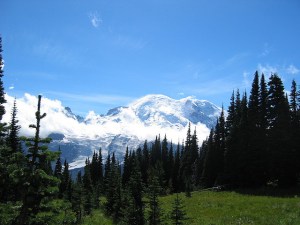
The photo below was taken during the drive in the park. You could see the prominent peak of Mount Rainier in the distance.

Mount Rainier

Crater Lake

A few years ago I went to Eugene, Oregon, to attend a wedding. While we were there, we had an extra day when we could do some sightseeing or a day trip. I went with some of my relatives to Crater Lake National Park, which was around three hours southeast of Eugene. Crater Lake National Park is a unique park where the main feature is its namesake, Crater Lake, a caldera lake that was formed around 7,700 years ago when a volcano called Mount Mazama erupted and collapsed. There is no water source flowing into the lake; it gets the water from rainfall or snowfall. As such, the water is among the purest in the world, giving it its clear blue color when combined with its depth. The lake at average depth around 1,150 ft is the deepest lake in the United States (ninth deepest in the world).

During the road trip to Crater Lake, one thing that was nice about the drive was that for a long stretch, it went through the Umpqua National Forest, so it was quite a scenic drive with pine trees around and at times we would cross rivers and streams. It was pretty interesting that as we got closer to the lake, the drive was like going up on the mountain (well, because it was actually going up the mountain), until we reach closer to the rim of the caldera. We could walk on the rim and enjoy the panoramic view of the lake (it is 5 by 6 miles in area). There is also a road that you can drive around and get the glimpse of the lake from various angles.

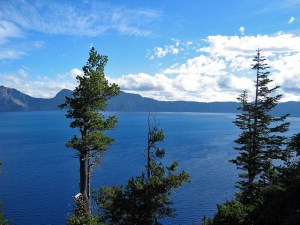
The photo below was taken at one of the overlooks during our drive around the lake. I didn’t have a camera with wide enough angle that could capture the panoramic view of the lake, but this particular photo shows the deep blue color of the lake surface.

Blue water of the Crater Lake

Acadia

The Northeast region of the United States has many historical sites especially related to the American revolution. However, when it comes to national parks, only one of the 58 US national parks is located in the region: Acadia National Park in Maine. I wrote a little bit about Acadia as part of my series of postings on my New England trip a few weeks ago, so this posting is also about Acadia, but a different aspect of visiting the park that might be interesting to potential visitors.

If you ask any locals or frequent visitors to Acadia for a favorite place to visit inside the Acadia National Park, one likely answer is the Jordan Pond. It’s a nice pond in the middle of the park that is located near the Bubbles, two mountains that are among the well-known landmarks inside the park. The scenery is wonderful, but what makes a visit to Jordan Pond memorable is a stop for a lunch or dinner at the Jordan Pond House Restaurant situated near the Jordan Pond. The restaurant has wonderful view of the Jordan Pond and the Bubbles, and it’s also famous for its popovers. These popovers are served fresh from the oven with a meal there, part of dining tradition dated back to 1870s. I followed the suggestion and stopped by at the restaurant for lunch. The popovers are indeed worth the visit (and the wait for table during the busy season).

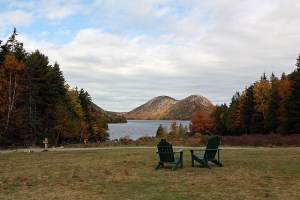
The photo below was taken from the lawn just outside the Jordan Pond House Restaurant. You can see the Jordan Pond and the Bubbles in the distance. During the summer, the restaurant also has outdoor seatings at the lawn area.

Jordan Pond