Peaceful Trek

During the walk down the road from the town of Sapa, Vietnam, to the village of Cat Cat, we discovered another aspect of visiting ‘off the beaten path’ destinations on our own: being able to experience and enjoy the slower pace of life and the peaceful atmosphere.

Since Kristi and I went on our own, we didn’t have the ‘entourage’ of local women going with us to sell souvenirs. We pretty much walked alone, and once in a while we passed locals either on foot or on motorcycles (which seemed to be the preferred ‘public transport’ locally). But to the most part we could just walk and simply got ‘lost’ in the village environment.

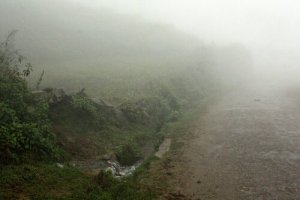
When there was no other ‘noise pollution’ or visual stimulus that compete for your attention, you start noticing little things. For me, it was the gentle sound of water streaming down on the side of the road, as seen in the photo below. The foggy day added another interesting dimension to the sense of place. I think this is why people came to this area back in the French colonial days — to get away from the hustle and bustle of the city and to slow down and rest.
Peaceful Trek

Fresh Produce

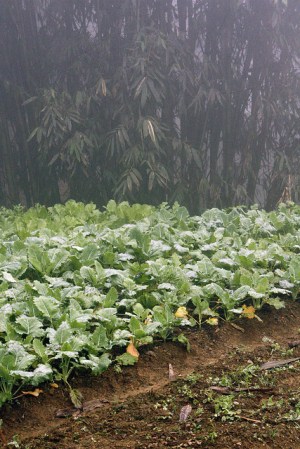
As we walked from the town of Sapa, Vietnam, towards the village of Cat Cat, we passed many local villagers homes. One observation that we made was that many local villagers seem to have garden to grow vegetables in their backyard. Some had quite a good-sized lot; they might have also grown the vegetables for sale in the market.

When we went on a guided trek the day before, our tour guide May said that even though the locals did consume meat, their daily diet was mostly vegetable-based as it’s cheaper (they can grow those themselves). So it’s not a surprise to see vegetable gardens everywhere. We did try a local hot pot dish the night before that had quite a good portion of vegetables in it; I thought it was good, refreshing, and we felt healthy after eating it. In general, that’s something nice to see and experience while going through Vietnam. We had tasty dishes that were made with fresh ingredients, and they seemed to be much healthier diet than what you would find in western countries like the United States.

Below is a photo taken during the walk to Cat Cat village. It was one of those vegetable gardens in the local home’s backyard. The mist from the rain and the cool weather provided natural refrigeration and watering to keep the vegetable fresh.

Fresh Greens

Cat Cat Village

Cat Cat is a village close to Sapa, Vietnam. The village was one of the several villages that were becoming popular among tourists who came to trek and see the villages where the local minorities live.

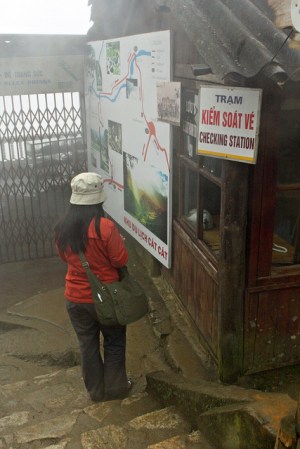
Compared to the other villages, Cat Cat is among the closest in distance to Sapa, and the route to get there is pretty straight forward. As such, they have more visitors who come on their own (without tour guide). The local government also tried to capitalize on this by having a ‘toll gate’ where we needed to purchase entrance tickets before entering the only road that led to the village. When we reached the village, there was a booth where they checked for the tickets, and they had a well-laid out path down the valley and through the village, complete with a map that showed the points of interests along the way.

The photo below showed the checkpoint where our tickets wew checked before entering the pathway to the village.

Entrance to Cat Cat Village

Independent Trekker

One option to consider when visiting Sapa, Vietnam, is to do your own trekking without enlisting a tour company to arrange the trip. This would give you more freedom to explore the area at your own time and create an experience that’s possibly unique to yourself. But it might not be one for you if you’re more structured or less adventurous, unless you can plan ahead of time and chart out your route.

On our second day in Sapa, our guided trek was cancelled, so we’re left with the option of exploring on our own, or just staying put at the hotel. We had pretty much all day, but we also had to be back at the hotel by 6 pm and ready to go for our trip back to Hanoi. So, after spending the morning only hanging out in the town of Sapa close to the hotel, we finally decided to spend a couple of hours doing our own trek to a nearby village called Cat Cat that’s located only about 1-2 miles away from the hotel, and according to the hotel staff, it’s pretty easy to find.

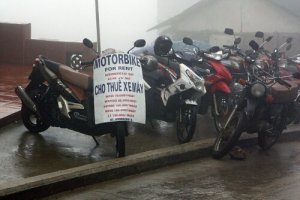
On the way to do our own trek, we saw one more option that’s probably even more adventurous — rent a motorbike to ride around to villages. The cost was pretty reasonable, and it can get you to places more efficiently, but when the weather is not cooperating, with the steep grades in some location and muddy paths in others, I’m not sure this would be a safe activity to do. All I could think of was a tourist getting injured in a motorcycle accident, and his/her travel insurance wouldn’t cover the expenses because the activity was considered as one that’s not covered by the insurance policy.

The photo below was taken as we passed the motorcycle rental place. You can see the various motorcycles they had. Notice there was only one helmet there; I wonder if that’s considered optional.

Motorbike for Rent

Mobile Phones

When traveling these days, it’s difficult to travel without having some form of electronic communication. At the minimum, having access to the Internet via connection at an Internet cafe is useful so one can communicate with others during the trip, or use the Internet to find the latest, up-to-date information about the places to be visited. As you travel to different places in the world, it is also interesting to observe how the locals use technologies.

During our Southeast Asia trip in 2010-2011, one thing I noticed was how ubiquitous wireless communication was in the countries we visited, including places that one may think as a third-world or developing countries. In Cambodia, our local tour guide mentioned that one of the most well-known brands there was Nokia — almost everyone had Nokia mobile phones, some never even had or known the concept of land phone lines at homes or offices. In Indonesia, these days Blackberry is king. Even though in the US people abandoned their Blackberry devices for iPhones and Android smart phones, in Indonesia Blackberry had gained popularity because of its Blackberry messaging that is seen as more cost effective way to communicate in place of SMS / text messaging.

When we were in the mountainous region of Sapa, what was surprising for me to observe was how good the wireless signal reception was there — I had full 4 bars on my phone which was even stronger signal than some places in the Washington, DC, area where I live. In some areas, the developing countries today have more modern and sophisticated communication network as they essentially went directly to the latest technology rather than having to upgrade existing, outdated legacy infrastructure that’s in place.

The photo below shows my Blackberry with the signal reception I got in Sapa — full bars, even when we walked around in the nearby villages.

Mobile Phone