Domesticated Animals

As we walked down the path to the village of Cat Cat near Sapa, Vietnam, we passed many homes and shops where the locals had domesticated animals around, ranging from dogs to ducks, chickens, and pigs. As I remembered our encounters with these animals during our trek (some we met quite literally on the walking path as they freely roamed around their neighborhood), I couldn’t help to think of the difference between these domesticated animals and the ones you now see in big cities / urban areas especially in the western world.

If we observed the domesticated animals we saw in the villages of Sapa, you could likely guess the reasons why these animals were there. Usually they serve a certain function, whether as a guardian, as a helper for work, or as potential meat source. This is probably the same way in most places around the world, at least traditionally.

In big cities and more affluent societies, today you see more and more people having domesticated animals as pets. In some places, having pet is almost equivalent or (some people perhaps even consider them as a replacement of) to having a child. Pets are given treatment that are more costly than what’s given to a human being, and people would argue for more ‘humane’ way of treating animals. I suppose when you have the luxury and options to choose what you want you can do this. I doubt in small, remote villages people would think much about the animal rights or spending extra cash to treat their domesticated animals.

I remembered back when I was little in Indonesia we had a dog that we got from a neighbor and functioned as both a pet and guard dog. We didn’t do anything to abuse the dog or treat it in ‘inhumane’ way, but it didn’t get any special treatment either — the dog would eat leftovers of whatever we ate — nothing specially made or purchased to feed it.

The photo below was taken by Kristi as I saw a couple of piglets on the walking path and I tried to get closer to them to take photos. They ended up running away before I was able to take closer snapshot of them.

Chasing piglets

Sleepy Village

After reaching the entrance to the pathway to the Cat Cat village near Sapa, Vietnam, we showed our entrance tickets to the gentleman at the entrance booth, and off we went to explore the village through the well-paved and marked path to visit the village.

We walked down through the path following illustrated maps that were posted every several hundred feet or so. This village particularly had done a good job in setting up the village path so it’s easy for foreigners to navigate.

As we walked down the path, we passed a couple of souvenir shops on the side of the path that were set up, but weren’t seeing much traffic that day. One of them didn’t even have anyone manning the shop, only a dog that was sleeping near the merchandise.

It seemed like a very slow, and perhaps boring life there. But now, looking back from a very hectic life in big city, being in such a slow-paced place sounds great to me. I wish I could just be like that dog sleeping in a peaceful, quiet setting and not caring about anything.

The photo below showed the dog sleeping near the souvenirs — completely oblivious of anything going on around.

Sleepy Village

Peaceful Trek

During the walk down the road from the town of Sapa, Vietnam, to the village of Cat Cat, we discovered another aspect of visiting ‘off the beaten path’ destinations on our own: being able to experience and enjoy the slower pace of life and the peaceful atmosphere.

Since Kristi and I went on our own, we didn’t have the ‘entourage’ of local women going with us to sell souvenirs. We pretty much walked alone, and once in a while we passed locals either on foot or on motorcycles (which seemed to be the preferred ‘public transport’ locally). But to the most part we could just walk and simply got ‘lost’ in the village environment.

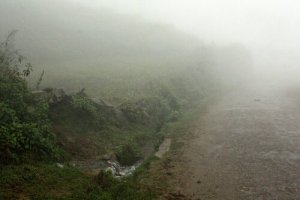
When there was no other ‘noise pollution’ or visual stimulus that compete for your attention, you start noticing little things. For me, it was the gentle sound of water streaming down on the side of the road, as seen in the photo below. The foggy day added another interesting dimension to the sense of place. I think this is why people came to this area back in the French colonial days — to get away from the hustle and bustle of the city and to slow down and rest.

Peaceful Trek

Fresh Produce

As we walked from the town of Sapa, Vietnam, towards the village of Cat Cat, we passed many local villagers homes. One observation that we made was that many local villagers seem to have garden to grow vegetables in their backyard. Some had quite a good-sized lot; they might have also grown the vegetables for sale in the market.

When we went on a guided trek the day before, our tour guide May said that even though the locals did consume meat, their daily diet was mostly vegetable-based as it’s cheaper (they can grow those themselves). So it’s not a surprise to see vegetable gardens everywhere. We did try a local hot pot dish the night before that had quite a good portion of vegetables in it; I thought it was good, refreshing, and we felt healthy after eating it. In general, that’s something nice to see and experience while going through Vietnam. We had tasty dishes that were made with fresh ingredients, and they seemed to be much healthier diet than what you would find in western countries like the United States.

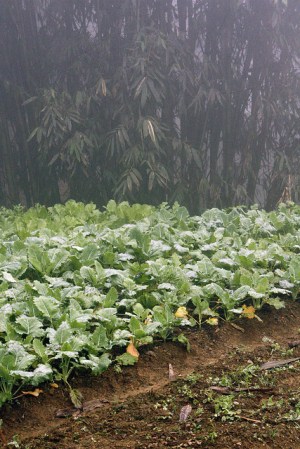
Below is a photo taken during the walk to Cat Cat village. It was one of those vegetable gardens in the local home’s backyard. The mist from the rain and the cool weather provided natural refrigeration and watering to keep the vegetable fresh.

Fresh Greens

Cat Cat Village

Cat Cat is a village close to Sapa, Vietnam. The village was one of the several villages that were becoming popular among tourists who came to trek and see the villages where the local minorities live.

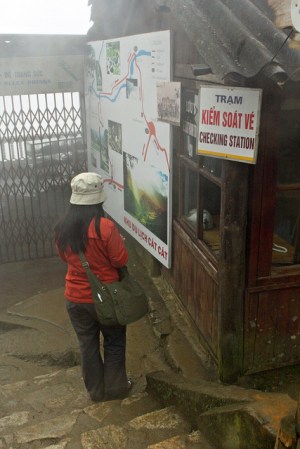
Compared to the other villages, Cat Cat is among the closest in distance to Sapa, and the route to get there is pretty straight forward. As such, they have more visitors who come on their own (without tour guide). The local government also tried to capitalize on this by having a ‘toll gate’ where we needed to purchase entrance tickets before entering the only road that led to the village. When we reached the village, there was a booth where they checked for the tickets, and they had a well-laid out path down the valley and through the village, complete with a map that showed the points of interests along the way.

The photo below showed the checkpoint where our tickets wew checked before entering the pathway to the village.

Entrance to Cat Cat Village